
Monitoring your blood pressure at home is no longer optional — it’s essential.
Whether you’ve been diagnosed with hypertension, are managing heart health, or simply want to stay proactive, a reliable home blood pressure monitor can literally be life-saving. But not all monitors are created equal.
Today, we’re taking an in-depth expert look at the:
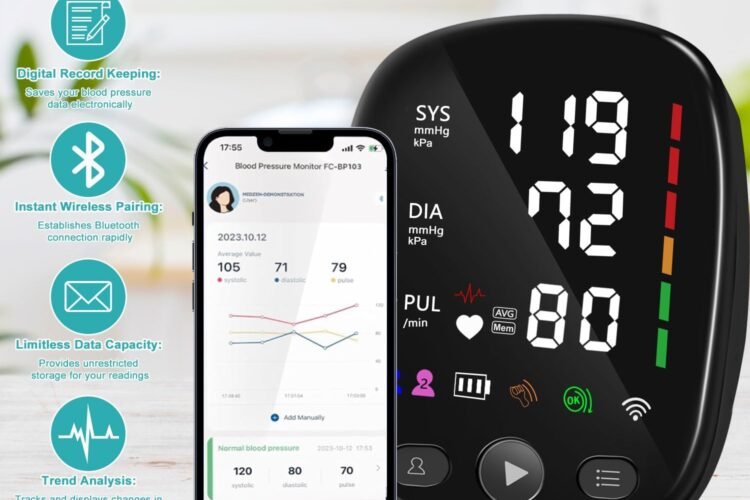
Bluetooth Automatic Blood Pressure Monitor for Home Use
With Adjustable Upper Arm Large Cuff (8.7”–17.3”), App Tracking, LED Display, 2 Users, 240 Memory Sets, Hypertension Detector
This model promises:
- Clinical-level accuracy
- Bluetooth smartphone syncing
- Large adjustable cuff
- 2-user support
- 240 stored readings
- Hypertension detection alerts
But does it actually deliver?
Let’s break it down in detail.
Why Home Blood Pressure Monitoring Matters More Than Ever
According to the CDC, nearly half of American adults have high blood pressure — and many don’t even know it. Hypertension is often called “the silent killer” because symptoms are minimal until serious complications occur.
Regular home monitoring helps you:
- Detect early warning signs
- Track medication effectiveness
- Identify lifestyle triggers (stress, salt, caffeine)
- Provide better data to your doctor
- Avoid unnecessary office visits
That’s why choosing the right device matters.
First Impressions & Build Quality
Right out of the box, this Bluetooth Automatic Blood Pressure Monitor feels designed for real-world home use — not overly clinical, not cheap.
✔ Large LED Display
The oversized LED screen is one of the biggest advantages. Numbers are bold, bright, and easy to read — even for seniors or users with vision challenges.
It clearly displays:
- Systolic pressure
- Diastolic pressure
- Pulse rate
- Hypertension indicator
- User profile (User 1 or 2)
No squinting required.
✔ Adjustable Upper Arm Cuff (8.7″–17.3″)
This is a major selling point.
Many affordable monitors fail because the cuff is too small. This one supports arms from approximately 22cm to 44cm (8.7–17.3 inches), covering:
- Smaller adult arms
- Average builds
- Larger or muscular arms
The cuff feels secure without being overly tight, and the Velcro holds firmly during inflation.
Core Features Breakdown (Expert Analysis)
Let’s examine each feature in detail.
1️⃣ Fully Automatic Operation
This device uses oscillometric measurement technology. That means:
- One-touch operation
- Automatic inflation
- Automatic deflation
- No manual pumping
You press start, sit still, and the device handles everything.
For seniors or anyone uncomfortable with medical equipment, this simplicity is critical.
2️⃣ Bluetooth App Tracking
This is where it becomes a modern smart device rather than just a basic monitor.
What the App Allows:
- Automatic syncing of readings
- Historical trend tracking
- Date/time stamps
- Graph visualization
- Long-term data storage
- Easy sharing with healthcare providers
This is especially useful for:
- People tracking medication adjustments
- Patients asked to monitor morning vs evening readings
- Individuals managing chronic hypertension
Instead of writing numbers in a notebook, everything stays digitally organized.
3️⃣ 2 Users + 240 Memory Sets
This monitor supports:
- Two separate user profiles
- 120 readings per user
- 240 total stored readings
That makes it ideal for:
- Couples
- Roommates
- Caregivers monitoring two patients
Many entry-level monitors only store 60–90 readings total. 240 sets is impressive for this category.
4️⃣ Hypertension Detection Indicator
After each reading, the monitor displays a classification indicator.
It alerts if readings fall into:
- Normal range
- Elevated
- Stage 1 hypertension
- Stage 2 hypertension
This visual feedback helps users understand results immediately — without Googling numbers every time.
Important: This is not a medical diagnosis tool, but it provides helpful guidance.
5️⃣ Pulse & Irregular Heartbeat Detection
In addition to blood pressure, this device tracks pulse rate and can detect irregular heartbeat patterns during measurement.
For people concerned about:
- Arrhythmias
- Stress-related pulse changes
- Heart rhythm irregularities
This adds an extra layer of monitoring.
Accuracy: The Most Important Factor
No matter how many features a monitor has — if it’s not accurate, it’s useless.
Upper arm monitors are generally more accurate than wrist models because they measure closer to heart level.
This device uses:
- Oscillometric measurement
- Automatic pressure control
- Digital calibration
When used properly (arm supported at heart level, seated posture, rested for 5 minutes), users typically report readings consistent with doctor visits.
However, accuracy depends heavily on proper technique.
How to Get the Most Accurate Reading (Expert Tips)
To maximize reliability:
- Avoid caffeine or exercise 30 minutes before measuring
- Sit quietly for 5 minutes
- Keep feet flat on the floor
- Support your arm at heart level
- Do not talk during measurement
- Take two readings and average them
Small mistakes can cause 5–15 point differences.
Pros and Cons
✅ Pros
- Large adjustable cuff (fits most adults)
- Bluetooth app integration
- 2-user support
- 240 memory storage
- Easy one-touch operation
- Bright LED display
- Hypertension alert system
- Affordable price point
❌ Cons
- Requires proper positioning for best accuracy
- App features depend on smartphone compatibility
- Battery-powered (not rechargeable unless specified)
- Not hospital-grade equipment
Who This Monitor Is Perfect For
✔ Adults monitoring mild to moderate hypertension
✔ Couples who both need tracking
✔ Seniors wanting easy-to-read display
✔ Tech users who prefer digital tracking
✔ First-time blood pressure monitor buyers
Who Might Want Something Else
✖ Clinical professionals needing hospital precision
✖ Multi-user households (3+ users)
✖ People who want rechargeable USB models
✖ Users uncomfortable with Bluetooth setup
Comparison: Upper Arm vs Wrist Monitors
Why choose this upper arm model instead of a wrist monitor?
Upper arm monitors:
- More accurate
- Less sensitive to position
- Recommended by doctors
Wrist monitors:
- Portable
- Easier to travel with
- More position-sensitive
For long-term health monitoring, upper arm is the better choice.
Real-World Use Case Scenarios
Scenario 1: Managing Medication
Your doctor adjusts your blood pressure medication. Instead of weekly office visits, you track daily readings and share app data.
Scenario 2: Lifestyle Changes
You start reducing sodium intake. Over 30 days, you observe measurable improvements.
Scenario 3: Stress Monitoring
You track how work stress affects your evening blood pressure.
The ability to track trends over time is far more valuable than a single reading.
Durability & Maintenance
To maintain accuracy:
- Replace batteries as needed
- Store in a dry location
- Clean cuff with damp cloth
- Avoid extreme temperatures
Most home monitors last 3–5 years with proper care.
Is It Worth the Price?
Given the features included:
- Bluetooth syncing
- Dual-user memory
- Large cuff
- LED display
- Hypertension detection
This monitor offers strong value for home use.
It delivers many features found in mid-range devices while remaining accessible to everyday buyers.
Frequently Asked Questions
Is this FDA approved?
Home blood pressure monitors sold in the U.S. must meet FDA clearance standards for over-the-counter medical devices.
Can two people use it?
Yes, it supports two users with separate memory storage.
Does it work without the app?
Yes. The monitor works independently. The app is optional but recommended.
Is it good for seniors?
Yes. The large LED display and one-touch operation make it senior-friendly.
Final Verdict (Expert Rating)
⭐ 4.4 / 5 Stars
The Bluetooth Automatic Blood Pressure Monitor for Home Use delivers:
- Reliable home tracking
- Strong value
- Smart connectivity
- Large adjustable cuff
- Dual-user memory
It’s an excellent choice for most U.S. households wanting consistent at-home monitoring without paying premium-brand prices. these glasses help you perform smarter, record better, and stay connected effortlessly.